
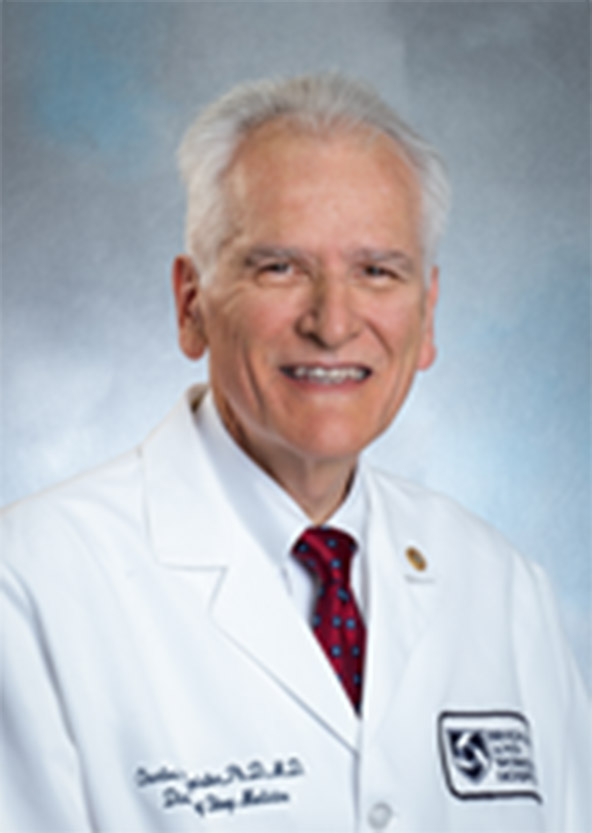
Charles A. Czeisler, M.D., Ph.D.
Frank Baldino, Jr., Ph.D. Professor of Sleep Medicine, Brigham and Women's Hospital
Frank Baldino, Jr., Ph.D. Professor of Sleep Medicine, HMS, Faculty of Arts & Sciences
Harvard Title
Baldino Professor of Sleep Medicine
Administrative and Hospital Titles
Director, Division of Sleep Medicine
Chief and Senior Physician, Division of Sleep and Circadian Disorders, Department of Medicine, Mass General Brigham
Senior Investigator, Division of Sleep and Circadian Disorders, Department of Medicine, Mass General Brigham
Other Affiliation(s)
Affiliated Faculty, Health Sciences and Technology, Harvard-Massachusetts Institute of Technology
Member, Human Factors and Performance Team, National Space Biomedical Research Institute
Address
Division of Sleep and Circadian Disorders, Brigham and Women's Hospital
221 Longwood Ave, Room 438A
Boston, MA 02115
Publications View
Simulations of light effects on the human circadian pacemaker: implications for assessment of intrinsic period.
Use of bright light to treat maladaptation to night shift work and circadian rhythm sleep disorders.
Contribution of the circadian pacemaker and the sleep homeostat to sleep propensity, sleep structure, electroencephalographic slow waves, and sleep spindle activity in humans.
Suppression of melatonin secretion in some blind patients by exposure to bright light.
Authors: Czeisler CA, Shanahan TL, Klerman EB, Martens H, Brotman DJ, Emens JS, Klein T, Rizzo JF.
N Engl J Med
View full abstract on Pubmed
N Engl J Med
View full abstract on Pubmed
The effect of light on the human circadian pacemaker.
Sleep and alertness in a 12-hour rotating shift work environment.
Authors: Budnick LD, Lerman SE, Baker TL, Jones H, Czeisler CA.
J Occup Med
View full abstract on Pubmed
J Occup Med
View full abstract on Pubmed
Persistence of the circadian thyrotropin rhythm under constant conditions and after light-induced shifts of circadian phase.
Paradoxical timing of the circadian rhythm of sleep propensity serves to consolidate sleep and wakefulness in humans.
Sensitivity of the human circadian pacemaker to moderately bright light.
Phase-amplitude resetting of the human circadian pacemaker via bright light: a further analysis.